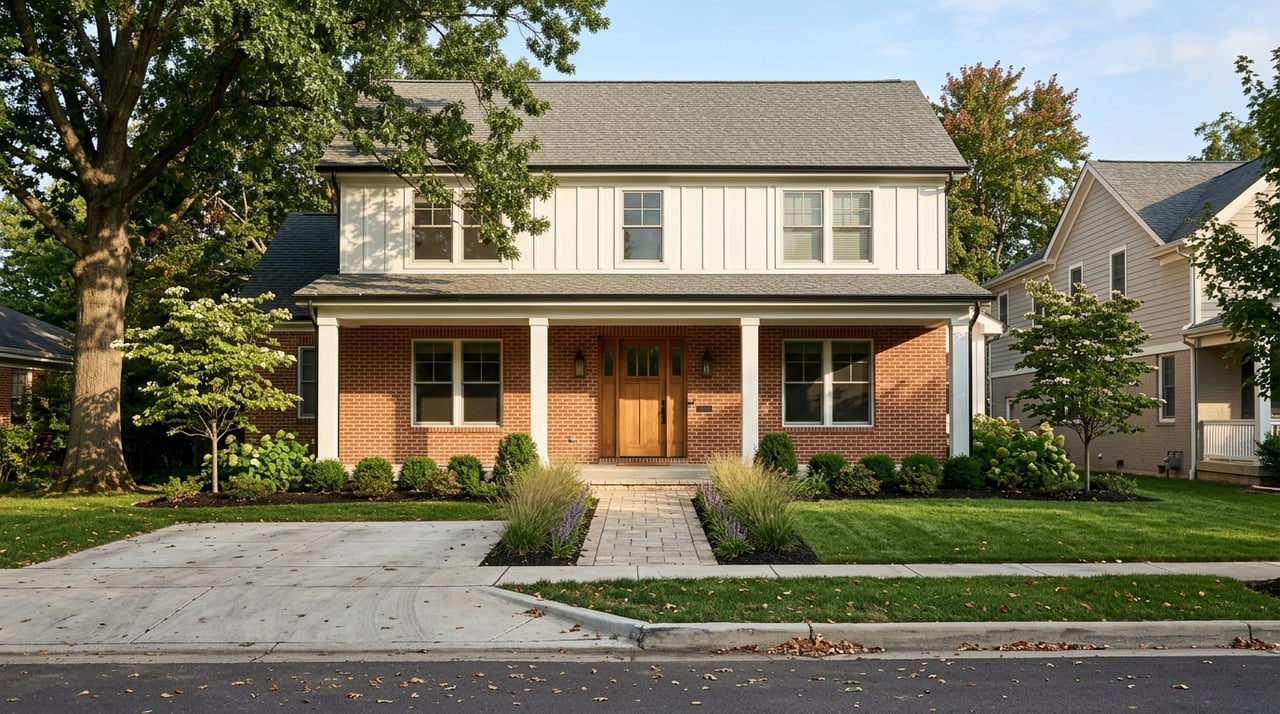
Wondering whether Georgetown or Lexington makes more sense for your next move? You are not alone. A lot of buyers assume one city is clearly cheaper or clearly better, but the real answer is more practical than that. If you compare the latest numbers and the day-to-day lifestyle, you will see that the better fit often comes down to inventory, commute patterns, and the kind of home life you want. Let’s dive in.
Why the price gap is smaller than expected
At first glance, many buyers expect Georgetown to come in far below Lexington on price. Right now, that is not really what the market is showing. Recent market snapshots put Georgetown’s median listing price at about $389,740 and Lexington’s at about $389,000.
That near tie matters because it changes the question you should ask. Instead of asking which city is cheaper, it is smarter to ask which market gives you the right home type, location, and pace of life for your budget. In both places, homes are also selling close to asking price, with a 99% sale-to-list ratio.
There is still an important difference under the surface. Census figures show owner-occupied home values are higher in Lexington than in Georgetown, even though today’s listing medians look very similar. That suggests the two markets may share a headline price point while offering different housing mixes and neighborhood patterns.
Georgetown and Lexington by the numbers
Georgetown and Lexington are very different in size. Georgetown’s population estimate is 40,883, while Lexington-Fayette is at 329,751. That larger scale affects everything from inventory depth to neighborhood variety.
Georgetown also has a higher owner-occupied housing rate at 62.3% compared with 53.8% in Lexington. Its average household size is larger too, at 2.56 versus 2.23. Median household income is also higher in Georgetown at $80,088 compared with $69,479 in Lexington.
These numbers do not tell your full story, but they do point to a different housing profile. Georgetown trends more owner-occupied and residential in feel, while Lexington operates on a much larger metro scale. That distinction can shape how your search feels from the start.
Housing inventory is the real difference
If you only compare median price, you miss the biggest point. Georgetown and Lexington are not just different markets. They are different inventories. That may be the most important takeaway if you are planning a move.
Georgetown homes tend to lean detached
Georgetown and Scott County show a strong detached-home pattern. A local housing needs assessment found that 84.2% of survey respondents lived in single-family detached homes. That supports what many buyers notice quickly when they start touring the area.
You may find Georgetown especially appealing if you want a more traditional suburban layout or a detached home as your main priority. The market can feel more straightforward in that sense. At the same time, affordability is tighter than many out-of-town buyers expect.
The same local assessment found that 77.6% of respondents believed there is an affordable housing problem in the region. Another summary noted that affordable ownership options tend to cluster in Georgetown’s urban core and that only 28.6% of ownership homes were affordable to households at or below 80% of area median income in the study’s FHA-based scenario.
That means Georgetown is not simply the budget alternative to Lexington. If you are searching for value, you will want to look carefully at specific neighborhoods, age of housing, lot size, and whether new construction is part of your plan.
Lexington offers more variety
Lexington gives you a wider range of property types and neighborhood settings. Its market includes older homes, infill areas, preserved historic districts, and higher-end subdivisions. That broader mix can open more options if you want something specific in style or setting.
Lexington also has 15 local historic districts and 2 landmarks under historic-preservation review. In some areas, ND-1 overlay zones can regulate exterior materials, rooflines, landscaping, and other design features. If you are considering an older or more design-sensitive property, those local rules are worth understanding early.
The price range across Lexington neighborhoods is also much wider. Realtor.com market data shows neighborhood medians ranging from $262,000 in North Limestone to $771,950 in Ellerslie at Delong, with ZIP code medians stretching from $362,000 in 40511 to $599,450 in 40502. That is a very different search experience from a smaller-city market.
Inventory size and timing matter
Another practical difference is how many options you have at a given time. Georgetown had 364 homes for sale in the latest snapshot, while Lexington had 1,193. If you want more choices at once, Lexington naturally gives you a bigger pool.
Days on market are fairly close, with Georgetown at 34 days and Lexington at 30. Neither market suggests a dramatic timing advantage based on city averages alone. Still, the larger Lexington inventory can give you more room to compare home style, location, and condition before making a decision.
Georgetown’s smaller inventory can feel more focused, which some buyers like. Others may find they need to wait for the right home type to hit the market. That is especially true if you want a very specific lot size, layout, or newer build.
Commute and access are closer than you might think
For many buyers, this comparison comes down to daily driving. Georgetown and Lexington are about 22 miles apart by road, with a typical drive time of around 31 minutes under normal conditions. That makes Georgetown a realistic home base for many people who work or spend time in Lexington.
Census commute data also show similar average commute times. Georgetown comes in at 21.5 minutes and Lexington at 20.9 minutes. So on paper, the commute difference is not dramatic.
What matters more is where you are going and when. A drive to a job, appointment, or activity on one side of Lexington can feel very different from a trip to another part of town. Traffic patterns, interstate access, and your daily schedule will matter more than the city-to-city average.
Lexington sits at the intersection of I-64 and I-75, which supports strong regional access. Georgetown is also closely tied to I-75 traffic patterns and major regional employment. Kentucky’s announced $800 million Toyota investment in Georgetown in 2026 is another sign of how connected the local market is to regional commuting and job growth.
Lifestyle comes down to scale
Housing is only part of the move. The bigger question may be how you want everyday life to feel.
Georgetown offers smaller-city ease
Georgetown’s city materials emphasize a growing community, downtown shopping and dining, and parks and recreation services. That aligns with what many buyers are looking for when they want a smaller-city environment without giving up access to larger regional hubs.
If you like the idea of a more residential-first setting, Georgetown may feel easier to settle into. You may also appreciate a market where detached homes play a larger role and the overall scale is more compact.
Lexington brings metro-level variety
Lexington offers more amenities, more neighborhoods, and a more metro-style rhythm. It promotes horse country, bourbon, dining, trails, downtown attractions, and direct flights. The city also has a merged urban-county government, which reflects its broader regional role.
Lexington’s parks system includes miles of trails, neighborhood parks, dog parks, and community gardens. If you want more choices for dining, entertainment, recreation, and housing style, Lexington may check more boxes. The tradeoff is that daily life can feel busier and more urban depending on where you land.
Which city may fit your next move?
If you are still deciding, this simple framework can help.
Georgetown may fit you if you want:
- A smaller-city feel
- More emphasis on detached homes
- Close access to Lexington without living in the metro core
- A more residential-focused day-to-day setting
Lexington may fit you if you want:
- More neighborhood variety
- More historic, infill, or mixed housing options
- A broader amenity base
- More inventory and a wider price range across neighborhoods
How to make the right comparison
The smartest way to compare Georgetown and Lexington is not by city average alone. You will get a much clearer answer by narrowing the search to your budget, your commute target, and your preferred home style.
Start with a few practical questions:
- Do you want a detached home, a historic property, new construction, or more neighborhood variety?
- How important is a shorter drive to a specific part of Lexington or Georgetown?
- Do you want a smaller-city pace or more metro-style amenities?
- Do you need more inventory to compare, or are you focused on a narrower home type?
That approach tends to produce a better outcome than relying on one median price. In today’s market, Georgetown and Lexington can look similar on paper while feeling very different once you start touring homes.
If you are weighing both markets, local guidance can make the search much more efficient. A side-by-side plan based on neighborhoods, commute patterns, and property type can help you avoid wasting time on areas that do not really fit your goals. When you are ready to compare Georgetown and Lexington with a local strategy, connect with Jess Noto.
FAQs
What is the current price difference between Georgetown and Lexington homes?
- Recent market snapshots show Georgetown with a median listing price of about $389,740 and Lexington at about $389,000, so the citywide gap is very small right now.
Is Georgetown cheaper than Lexington for homebuyers?
- Not in a simple across-the-board way. Current median listing prices are nearly identical, so it is better to compare neighborhoods, home types, and commute needs rather than assume Georgetown is the lower-cost choice.
What type of homes are more common in Georgetown?
- Georgetown leans more heavily toward single-family detached homes. A local housing needs assessment found that 84.2% of survey respondents lived in detached homes.
What makes Lexington different from Georgetown for buyers?
- Lexington offers a larger inventory, more neighborhood variety, and a wider mix of housing types, including historic areas, infill locations, and higher-end subdivisions.
Can you commute from Georgetown to Lexington easily?
- In many cases, yes. Georgetown and Lexington are about 22 miles apart by road, with a typical drive of around 31 minutes under normal conditions, though your actual experience will depend on where you are headed and what time you travel.
Is Lexington reported the same way as Georgetown in market data?
- Not exactly. Lexington data are often reported as Lexington-Fayette Urban County, which covers a larger and more metropolitan area than Georgetown city data, so comparisons are useful but not perfectly apples-to-apples.