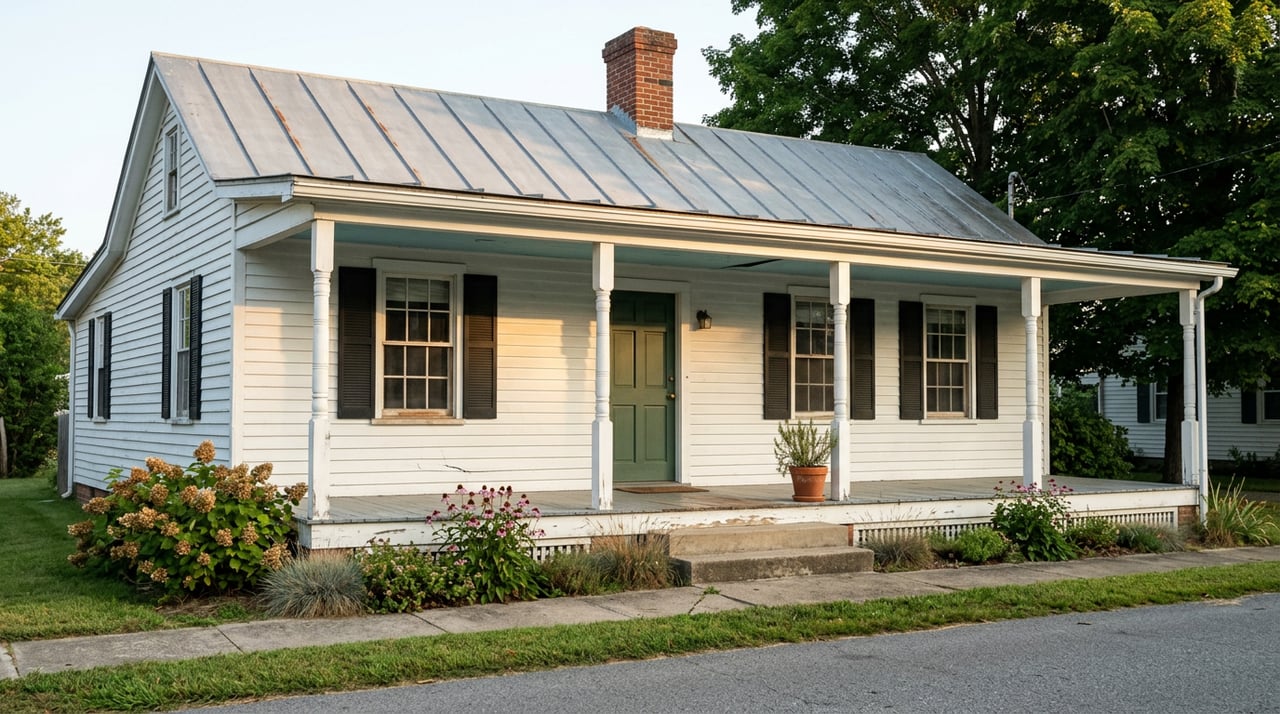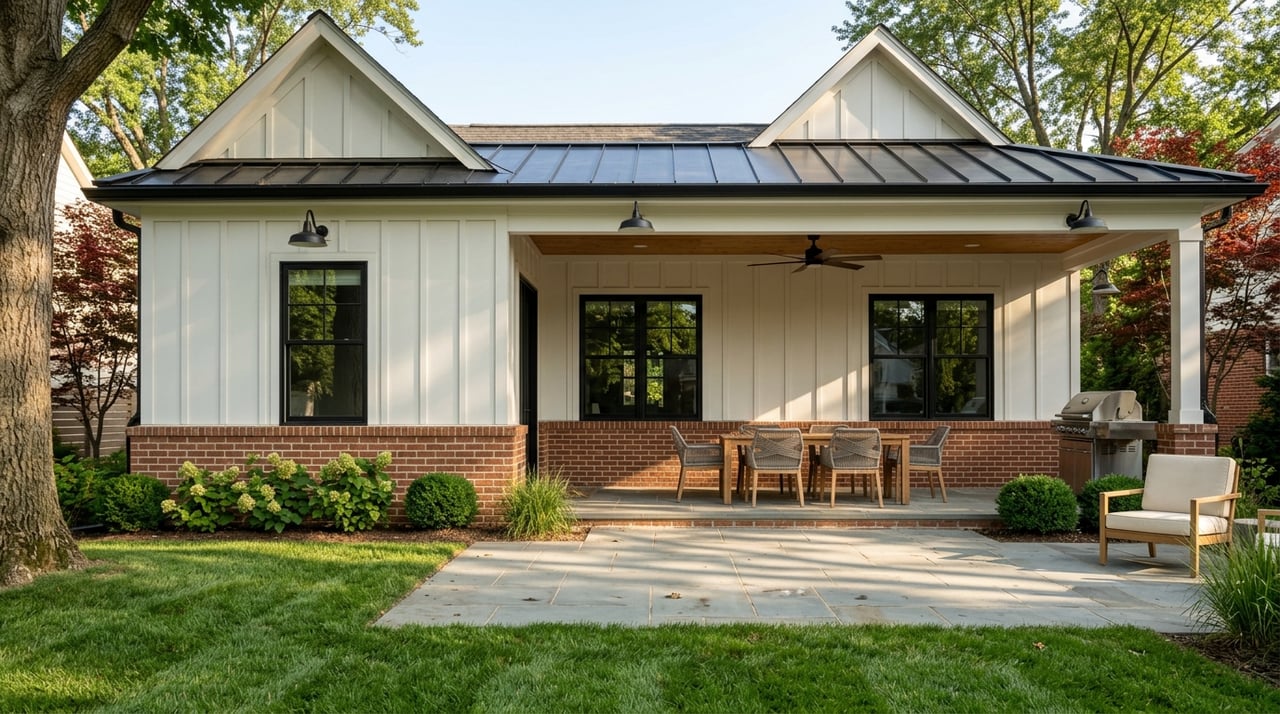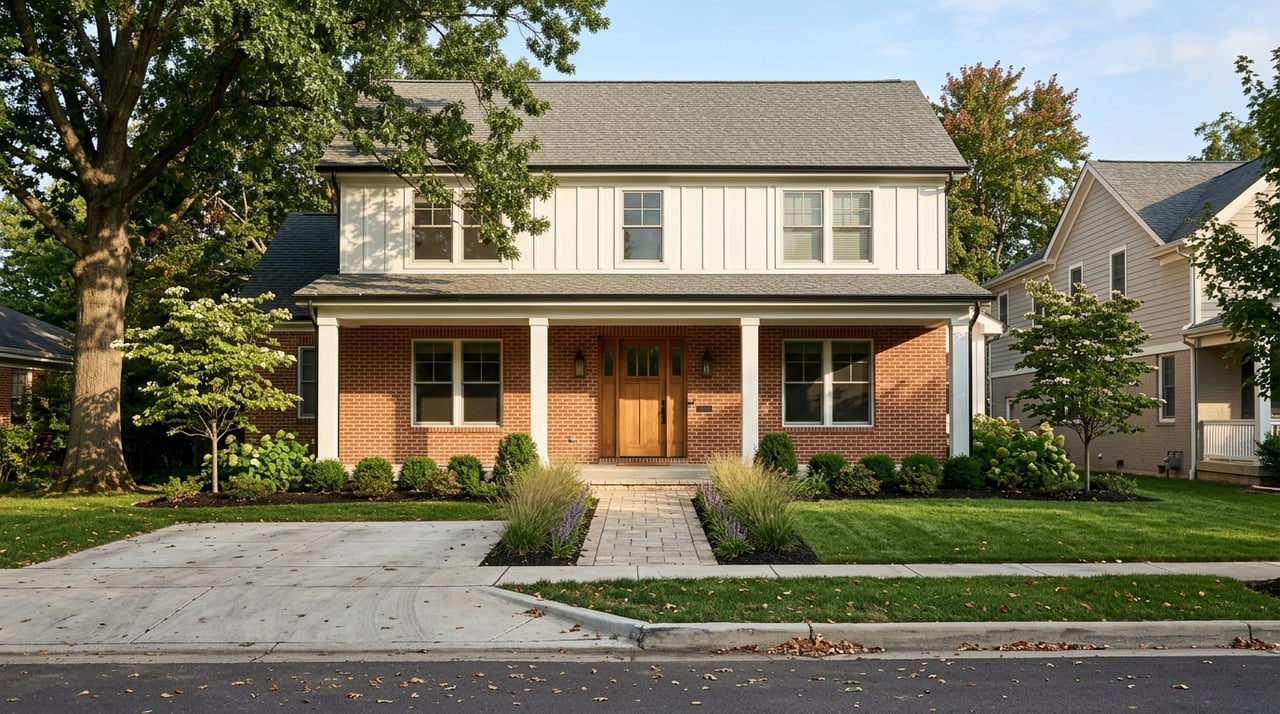
A 5.068-acre parcel on Locust Fork Road came on the market recently with a 60-by-75 barn, a concrete foundation already poured, and year-round spring access for horses. Good topography for a home site, a creek along one edge, nine miles to a Kroger, half a mile to a Dollar General. On paper it reads like a steal.
Here's the question worth asking before anyone gets excited about that price: why does land near Stamping Ground run so much cheaper per acre than land just down the road in Georgetown? The answer isn't that the dirt is worse or the location is less desirable. It's that the price is quietly compensating the buyer for a piece of homework the seller hasn't done yet, and in this part of the Bluegrass, that homework can make or break whether the lot is buildable at all.
The math that looks too good
As of August 2026, land listed near Stamping Ground averages roughly $34,222 per acre, based on current listings tracked across dozens of parcels in the area. Land specifically marketed as farmland runs even lower, closer to $20,376 per acre. Compare that to Georgetown proper, where per-acre pricing on active land listings averages around $72,597, more than double.
That gap holds even though Stamping Ground sits about 15 minutes from the Toyota plant and 10 minutes from I-75, which means the discount isn't a commute penalty. Statewide, Kentucky land overall averages about $21,685 per acre, so Stamping Ground isn't even cheap by Kentucky standards. It's cheap relative to its close-in neighbor, and that specific gap is the thing to understand before you write an offer.
| Area | Avg. price per acre (Aug 2026 listings) |
|---|---|
| Stamping Ground, all land | ~$34,222 |
| Stamping Ground, farm-classified land | ~$20,376 |
| Georgetown | ~$72,597 |
| Kentucky statewide | ~$21,685 |
Where the real answer to "water and sewer" comes from
Georgetown Municipal Water and Sewer Service delivers water and wastewater treatment to more than 15,000 customers across Georgetown and the surrounding parts of Scott County. A lot inside that service footprint already has a known, tested answer to two of the most expensive questions in rural construction: where does the water come from, and where does the waste go.
Most acreage listed around Stamping Ground doesn't have that answer yet. Listings advertise spring access, creek frontage, or a barn with a poured foundation, but rarely a public water tap or a sewer connection. That's typical for land outside a city's utility lines in Kentucky. It also means the buyer, not the seller, is the one who finds out whether the property can actually support a well and a septic system, and at what cost.
That uncertainty is worth real money. It's a large part of why an acre here costs less than half of what the same acre would cost a few miles closer to town.
The site evaluation is the real appraisal
Before you can treat any Stamping Ground parcel as buildable, Kentucky requires an on-site sewage site evaluation, and Scott County's is handled through the WEDCO District Health Department, which also covers Harrison and Nicholas counties. The process is straightforward on paper:
- Visit the local health department's environmental office and complete a site evaluation application, with the number of bedrooms planned, the property's acreage, and its location.
- Pay the site evaluation fee, currently $300.
- A certified inspector examines the soil, sometimes requiring backhoe pits dug at the applicant's expense, to determine whether the ground can treat and disperse wastewater.
- If the site passes, you move to hiring a certified installer. If it doesn't, you're looking at an engineered alternative system, which costs more, or you're looking at a different parcel.
A basic conventional septic system typically runs $5,000 to $12,000 once the site is approved. Advanced systems, the kind often required when standard trench soil isn't available, can run considerably higher. None of that is knowable from a listing photo. It only becomes knowable after the $300 evaluation, which is why skipping it to save time is the single most common way a good-looking acreage deal turns into a expensive one.
Why the Bluegrass makes this stricter than most places
Scott County sits in Kentucky's Inner Bluegrass, land shaped by limestone that dissolves slowly over time into sinkholes, underground channels, and springs. That same geology is part of what makes the region's pastures so good for grazing. It's also why the state treats septic siting here with more caution than it might in flatter, less soluble ground.
Kentucky's own regulation on sewage disposal systems spells this out plainly: any area closer than 70 feet to an open sinkhole opening, on the downhill side of that sinkhole's midpoint, is automatically ruled unsuitable for a septic system, full stop, no exceptions negotiated on site. Water moves fast through this kind of ground, which means a failing or improperly sited system doesn't just smell bad, it can reach groundwater quickly. That's the reasoning behind Kentucky's soil borings and backhoe pit requirements, and it's the reasoning behind why a lot with a visible sinkhole or a low spot that collects water needs a harder look before anyone assumes it's buildable.
If you're also planning a well, keep in mind the standard separation rules: most health departments require at least 50 to 100 feet between a well and a septic tank, and often 100 feet or more between a well and the drain field itself. On a smaller acreage tract, especially anything under an acre, those distances can be tight enough to limit exactly where a house, a well, and a drain field can each sit relative to one another.
The disclosure form won't tell you what the seller doesn't know
Kentucky law requires sellers of residential property to complete a written Seller's Disclosure of Property Condition, covering the water supply, the sewage system, and other major components. But the law only obligates a seller to disclose what they actually know from having lived there. There's no requirement that they hire an inspector or an engineer to verify the septic system before signing the form.
That matters more on rural acreage than it does on an in-town lot with a straightforward plumbing hookup. WEDCO's own records note that septic system information is typically on file with the health department only if the system was installed after 1985. A seller who bought a property with an older, existing system may genuinely have no documentation to hand you, and no legal obligation to go find out more than they already know. The disclosure form is real and it matters, but on a rural well-and-septic property, it's not a substitute for your own site evaluation and, separately, a professional septic inspection with a tank pump-out, which is a different service than the county's evaluation and usually runs a few hundred dollars on its own.
The other permission slip nobody mentions
There's a second, narrower friction point specific to this corridor that catches buyers off guard: parts of Scott County sit close enough to the Scott County Airport that building plans need sign-off from the Kentucky Airport Zoning Board in Frankfort for height restrictions. This has come up on listings near the Mallard Point area north of Georgetown, where a buyer building a home has to confirm their planned structure clears the zoning board's height limits before construction, not after.
It's not a universal issue across every Stamping Ground parcel, but it's exactly the kind of detail that a general search of "land for sale near Stamping Ground" won't surface, and exactly the kind of detail that can quietly stall a build if it's discovered after closing instead of before.
What this means for your offer
If you're looking at acreage near Stamping Ground, the discount compared to Georgetown isn't a red flag and it isn't free money either. It's the market pricing in a step that hasn't happened yet. The buyers who do well here are the ones who treat the septic site evaluation and, if relevant, the airport zoning check, as part of due diligence rather than an afterthought. Get the $300 evaluation done during your inspection period if the seller allows it, or make your offer contingent on a passing result. Ask directly whether the property has any existing septic records on file with WEDCO, and if it does, ask for the paperwork. If the land is anywhere near a sinkhole, a low spot, or the airport corridor, raise it before you're under contract, not after.
None of this makes rural acreage a bad move. It makes it a different kind of deal, one where the real appraisal happens in the soil, not on the listing sheet.
A few questions worth asking early
Does every acreage lot near Stamping Ground need its own well and septic system? Most do, since much of the surrounding acreage sits outside the areas served by Georgetown's municipal water and sewer lines. Some smaller in-town or subdivision lots may already have utilities available, so it's worth confirming service availability parcel by parcel rather than assuming.
How long does a septic site evaluation take? Timing varies by health department workload and whether backhoe pits are required, so it's worth building extra time into your due diligence period rather than assuming a quick turnaround.
What happens if a site evaluation comes back unsuitable? You may still have options through an engineered or alternative system, which costs more and requires additional design approval, or you may need to look at a different building location on the same parcel, or a different parcel entirely.
If you're weighing acreage near Stamping Ground against something closer to town, or you just want a second set of eyes on a listing before you write an offer, I'd be glad to help you think it through. Jess Noto works across Georgetown and the surrounding Central Kentucky communities, including Stamping Ground, and can point you to the right local resources before you're under contract, not after. Let's Connect.